
Loving Something, losing it and starting all over again
by Mary-Jane
To understand loss, one must first understand love. And I do love running.
Especially at this point in my life. There is something about running that allows me to be entirely at one with myself and with nature. It quietens my mind in a way that few other things can, by giving it something simple and rhythmic to attend to. The body takes over; the noise recedes.
There are two images I often return to when trying to explain this. The first is the hummingbird. I’ve always been struck by the idea that something can be in such constant motion and yet appear almost perfectly still. I recognise something of myself in that contradiction.
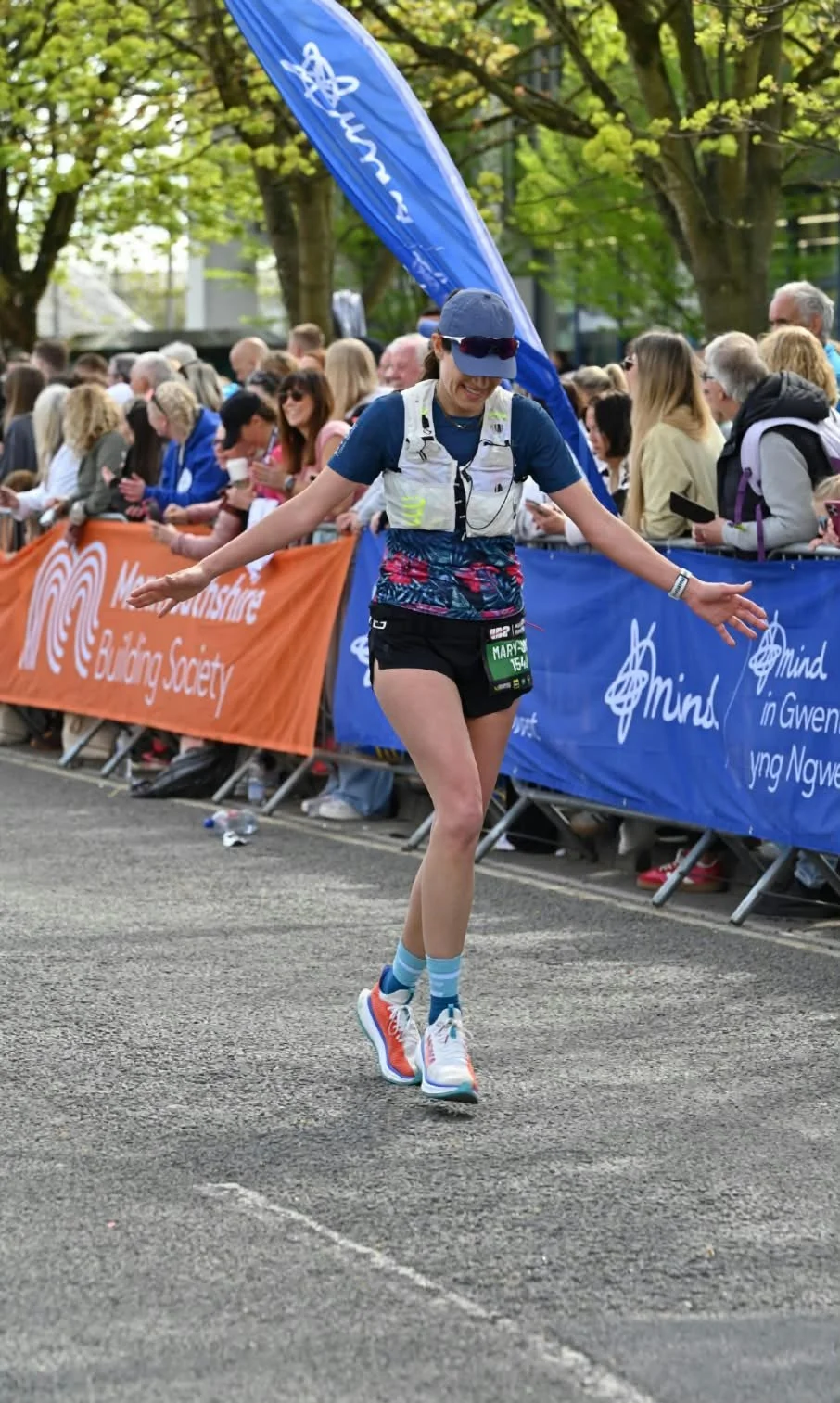
The second comes from a poem by Michael Brown, in which he writes:
Suppose in the rain, when you run you think of breath, the kilometre kiss-kiss of rubber on asphalt, your own cage of pain – what if no thought of else or other comes to enter the repeated metres repeated metres lapped in limbic dark?
The small, almost affectionate rhythm of shoe against ground; the pain cave. It’s a kind of primal meditation. A conversation with oneself that requires no words.
The business of running
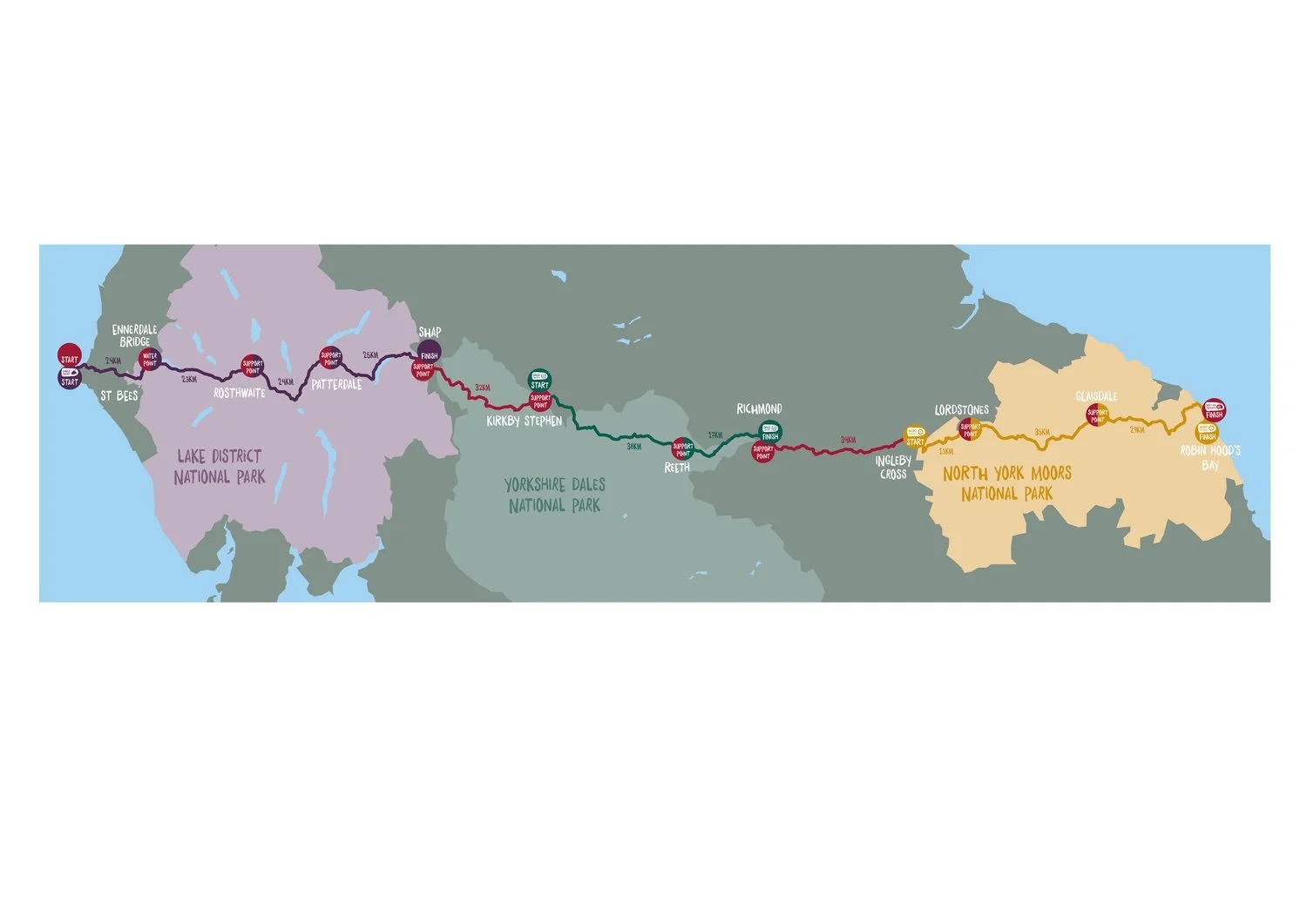
In the years leading up to 2025, I gave myself completely over to this love. I had lost count of the ultras, marathons, and other races, although there were enough to make the year feel like one long exercise in forward motion. Eventually, I signed up for the Northern Traverse: a 350-kilometre ultramarathon across the north of Britain, from one coast to another. It seemed an entirely reasonable thing to do!
I had recently started working with Mike and was beginning to take my training more seriously. One of the things I quickly came to appreciate about Mike was his quiet confidence. He has an enormous amount of knowledge, but wears it lightly. He is gentle, thoughtful, and very modest, and has a way of making even quite technical advice feel accessible and manageable. I found myself increasingly trusting his judgement. He brought structure and expertise to my training, but also a calmness that I hadn't realised I needed.
Then came a business trip to Nashville. I spotted an advertisement for a half marathon. What a lovely way to see a city, I thought. There was just one small complication: we had planned a period of rest and I hadn't packed my running shoes. Undeterred, and with the sort of confidence that comes from being very good at ignoring sensible advice, I ran the race in fashion trainers. By the finish line, I knew I had made a big mistake. A pain in my right foot had been building throughout the race, and now, with the adrenaline wearing off, it was impossible to ignore.
Back home, with the Northern Traverse very much in my sights, I made another first: On Mike’s advice, I went to see a physiotherapist. I had always considered myself resilient, but I was beginning to understand that resilience and stubbornness are not necessarily the same thing. I also carried a surprising amount of shame. I knew that my relationship with running had become something others might describe as extreme and I worried that I would be judged.
Mike was instrumental here. He helped me understand why I needed to, and how to approach the problem constructively. He encouraged me to seek the right professional support and helped me see that looking after my body was part of becoming a stronger runner, not an admission that I wasn't one. I suspect this was one of the first important lessons in our coaching relationship: sometimes the most valuable thing a coach can do is tell you something you don't particularly want to hear.
Recovery, it turned out, required a different kind of discipline. One that involved doing less, learning to be patient, learning to listen. And, perhaps most importantly, learning that rest was not the opposite of progress.
Mike helped me navigate this period with a mixture of patience and pragmatism. He worked with my physiotherapist to keep me focused on what I could do and helped me maintain a sense of purpose when running itself had temporarily been taken away. That shift in perspective gave me something to work towards without making every day about how quickly I could get back out on the trails.
The empty space
I continued working with Mike and gradually returned to running. The Traverse began to occupy an increasingly large space in my mind.
By now, my training had a much clearer direction. Mike was helping me build towards a very specific physical and mental challenge, breaking the distance down into manageable stages. There was discipline to the process: understanding training loads, balancing harder sessions with recovery, building endurance, building mindset.
I had bought everything on the kit list. I had worked out my race strategy, studied the terrain, read countless accounts from runners who had completed it before me. I knew where the difficult sections were, what the weather might throw at me and, as far as anyone can prepare for such a thing, what I was letting myself in for. I had started tapering when, 14 days before the start, I read the news.
The organisers had declared bankruptcy. The Northern Traverse was cancelled.
I imploded. It's difficult to explain the disproportionate sadness of losing something that, technically, you’ve never had. I had not yet stood on the start line, crossed a checkpoint, or taken a single step of the 350 kilometres. And yet, in my mind, I had already been there many times.
I had spent months imagining that race. It had become part of my everyday thinking, a destination towards which all the small decisions of training, eating, sleeping, and recovering were directed. I had pictured the landscape, the fatigue, the extraordinary feeling of moving through the night. I had imagined the finish. And then, suddenly, there was nothing.
I went through all the stages of grief, in no particular order: denial, anger, sadness. I felt cheated. Robbed, even. My mind had become so accustomed to wandering towards the Traverse that it continued to do so automatically, only to arrive at a gaping void.
And there was nowhere for me to put the disappointment: There was no injury to recover from, no physical challenge to overcome, no alternative race. The thing I had been working towards had simply ceased to exist.
Mike was a steady presence through this too. When so much of my training had been organised around a single objective, losing that objective left a large, black hole. He helped me put the disappointment into perspective without dismissing it.
It’s remarkable how much of the pleasure of pursuing something lies not in the achievement itself, but in the anticipation. In the long, slow accumulation of effort. In having somewhere to direct your attention and energy. The race had given shape to so many ordinary days, and now those days had lost their reference point.
Beginning again
A few months later, there was unexpected good news. The company had been acquired, and the Northern Traverse was back on the calendar for the following year. Everyone who had entered would receive an automatic place. I went back to Mike. But this time, I was in a much stronger position physically and mentally. The kit was already bought. The race strategies had been worked through. I knew more about the terrain and more about myself.
In many ways, we weren't starting again at all. Mike already knew me. He understood my appetite for a challenge, but also where that enthusiasm could get the better of me. There was now a shared understanding of what we were trying to achieve and how to get there.
I could concentrate on the things that really mattered: form, consistency, recovery. The preparation felt like a partnership with my body. It also felt like a partnership with my coach. Together, we had a much more thoughtful approach to the challenge than I could have managed alone.
And now, with 3 months to go, the countdown is on. Again.
The cancelled race took away the destination, but it couldn't take away the training, the learning, or the pleasure of having something to work towards. I still love the idea of those 350 kilometres. I still find myself imagining the landscape, the darkness, and the peculiar intimacy of putting one foot in front of the other for hours on end. But I’m also beginning to understand that loving something means accepting that it will not always give you what you want. Sometimes it will ask you to stop. Sometimes it will disappear altogether. And sometimes, if you are lucky, it will come back around.
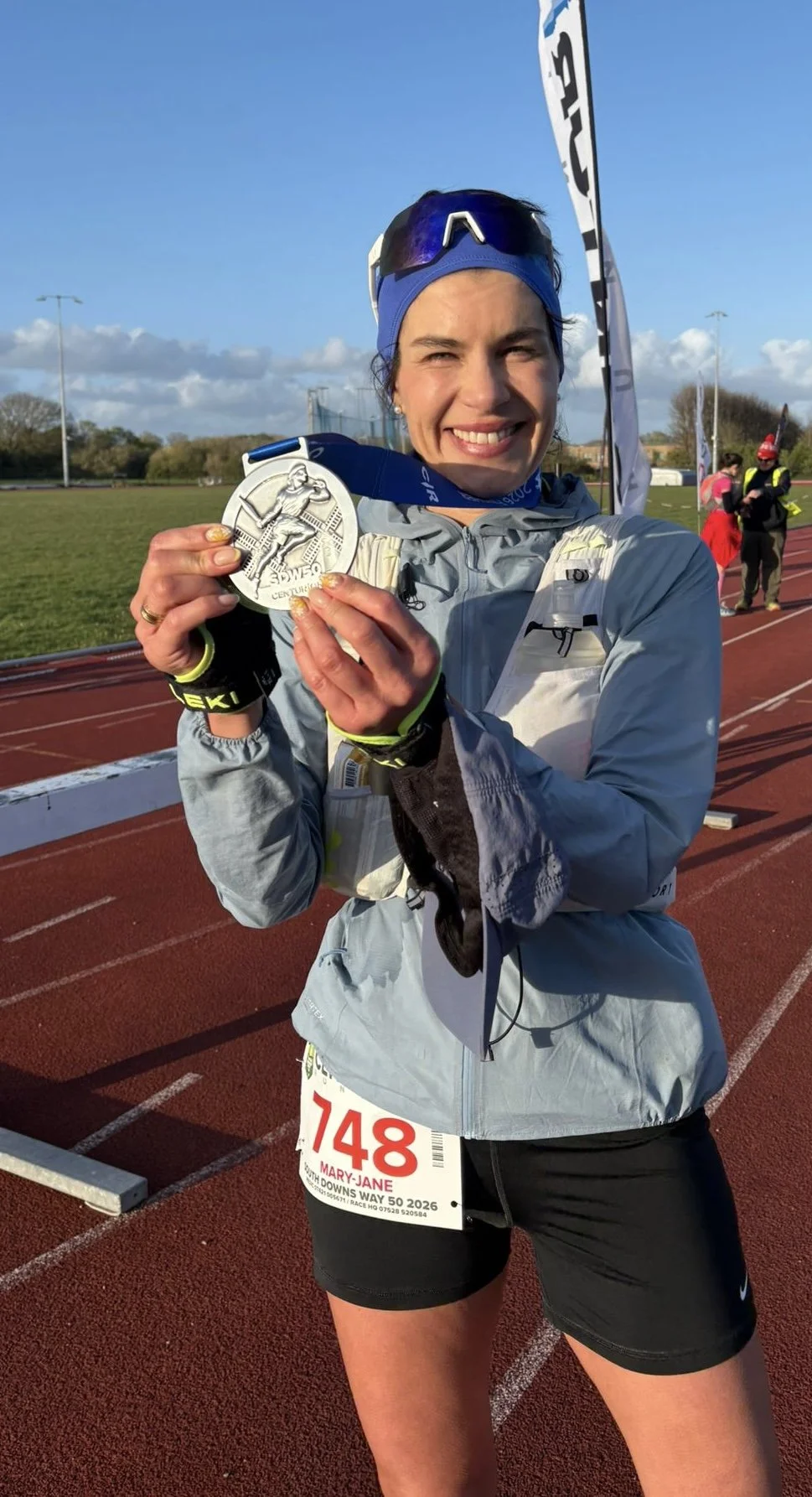
And sometimes… a few months on and at the South Downs Way 50.